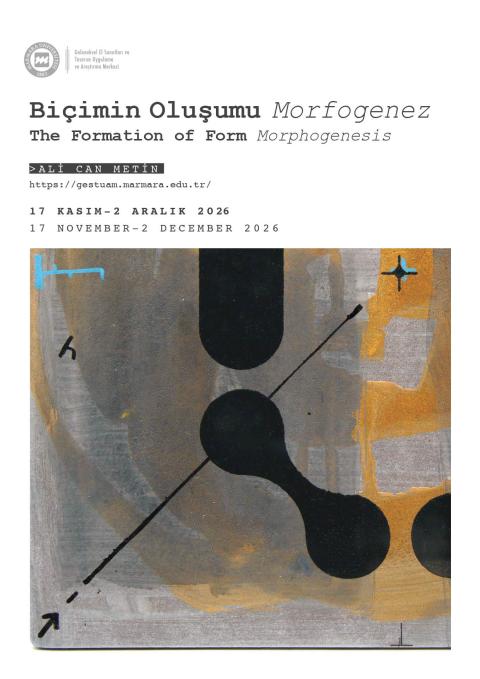
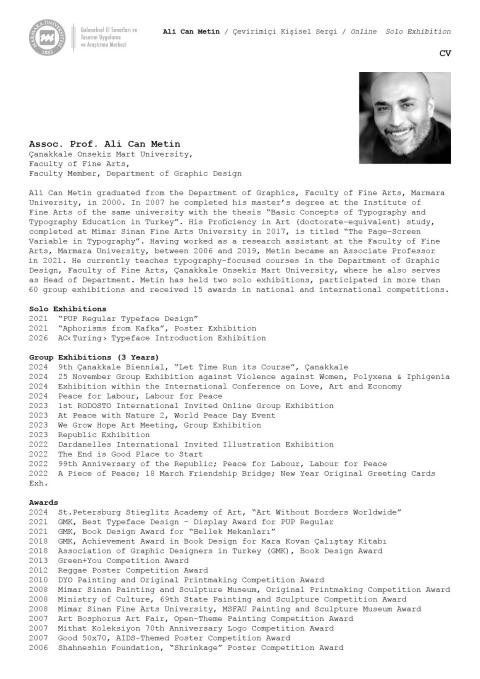
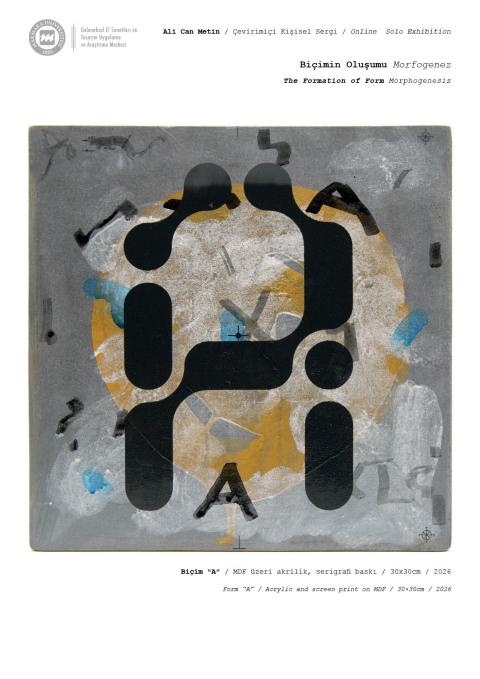
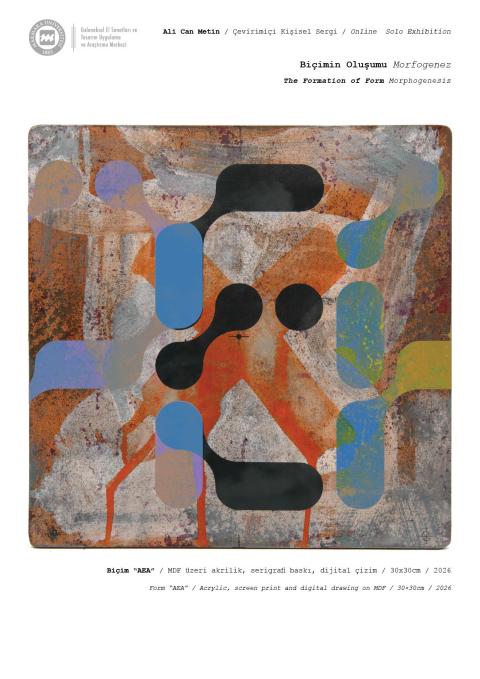
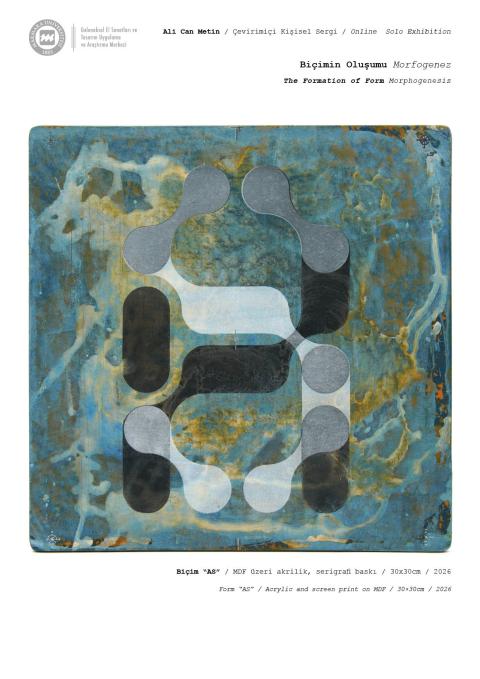
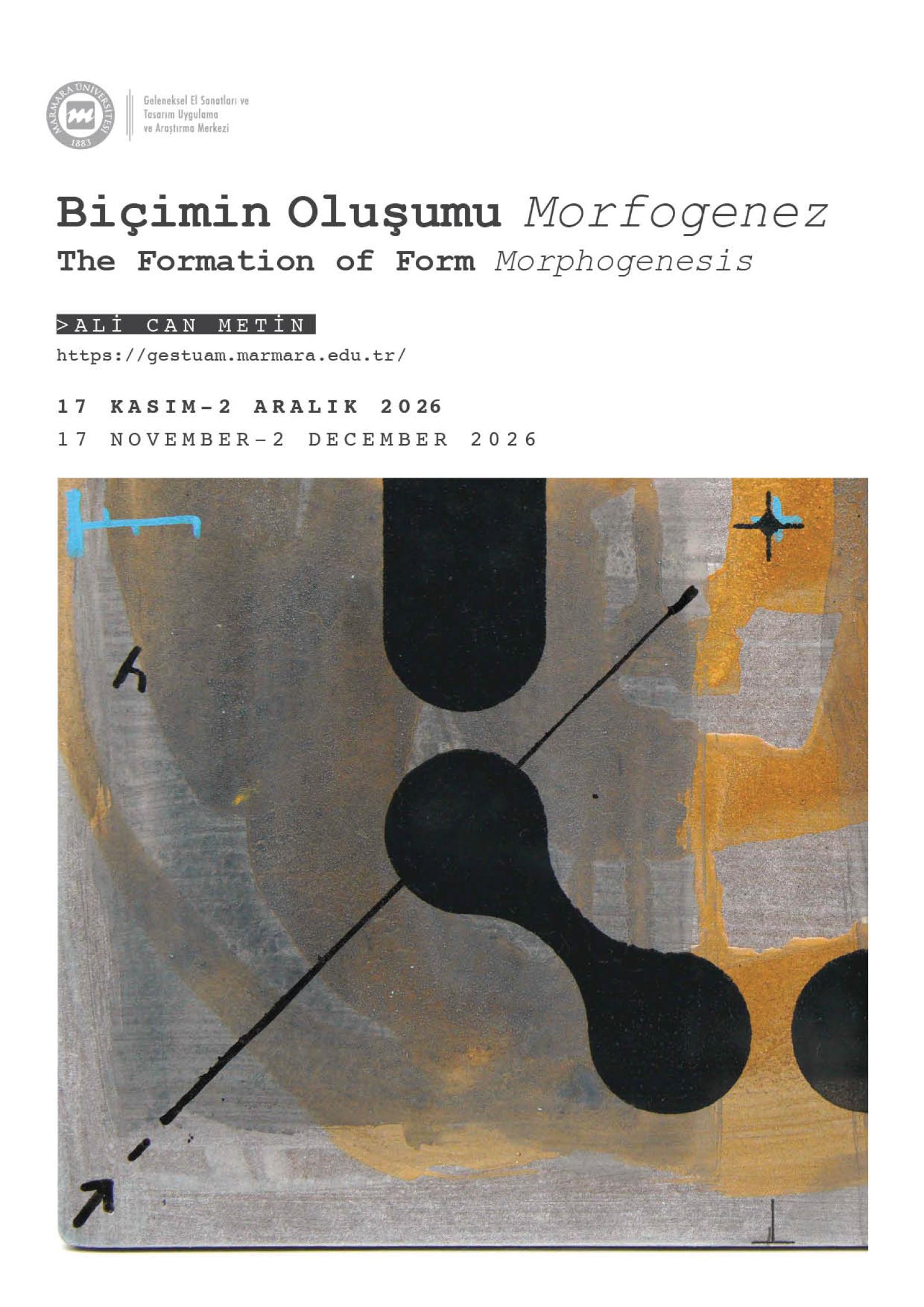
Marmara University Traditional Handicrafts and Design Application and Research Center (GESTUAM), as part of its solo exhibition series, is organizing the second online solo exhibition of Assoc. Prof. Dr. Ali Can METİN, a faculty member of the Department of Graphic Design at the Faculty of Fine Arts, Çanakkale Onsekiz Mart University, entitled “The Formation of Form: Morphogenesis.”
The Formation of Form / Morphogenesis
In his 1952 paper “The Chemical Basis of Morphogenesis”, Alan Turing sought to answer the question of how living organisms come to take their forms. According to his proposal, in an initially homogeneous medium, two substances that interact with each other and diffuse at different rates can spontaneously produce regular patterns. Known as the reaction–diffusion model, this approach is used today to explain the spots of the panther, the stripes of the zebra, the patterns on seashells and the traces left by cell division. For Turing, pattern in nature is not ornament. Pattern is the visible record of growth and proliferation.
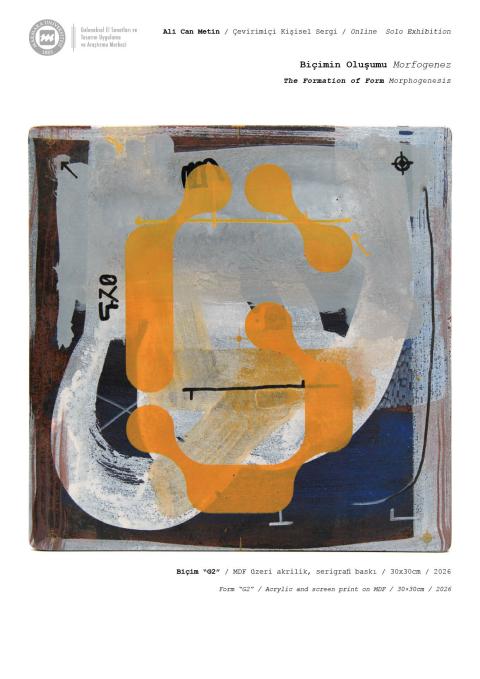
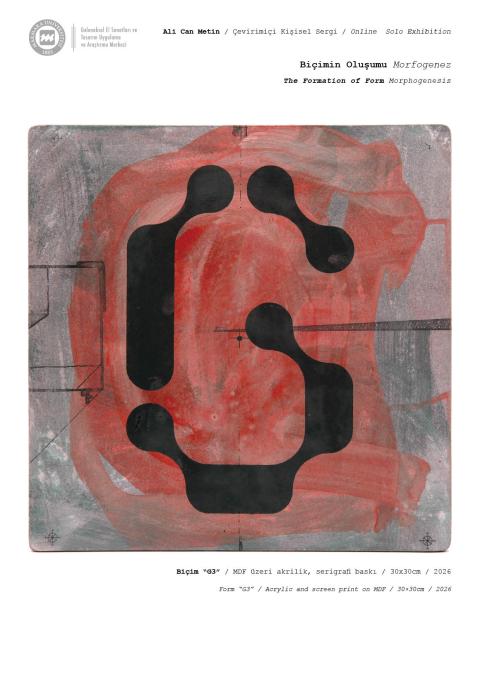
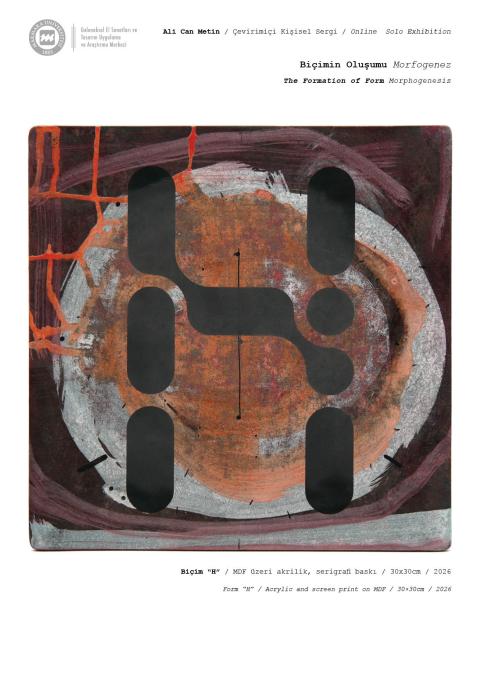
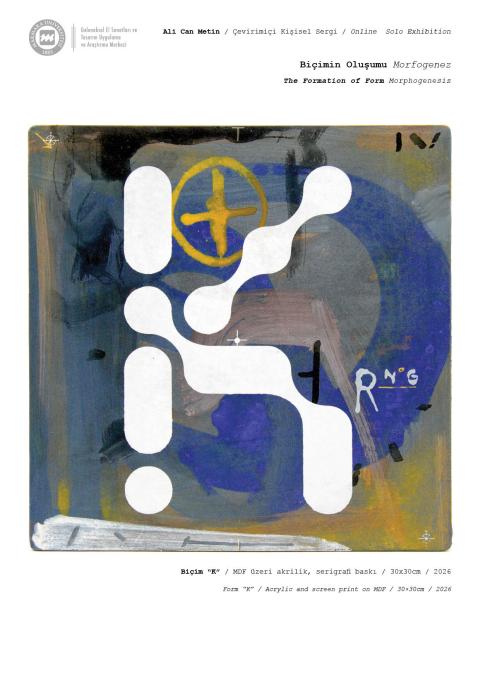
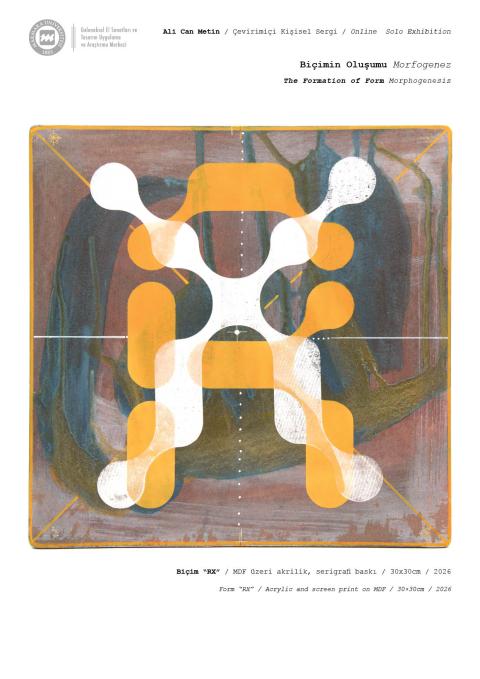
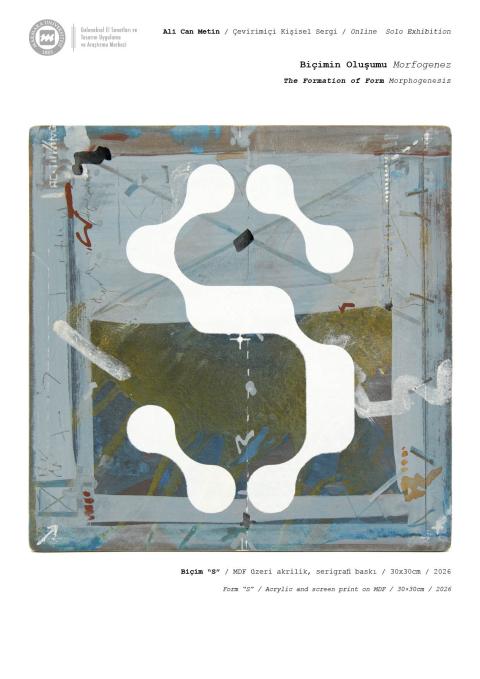
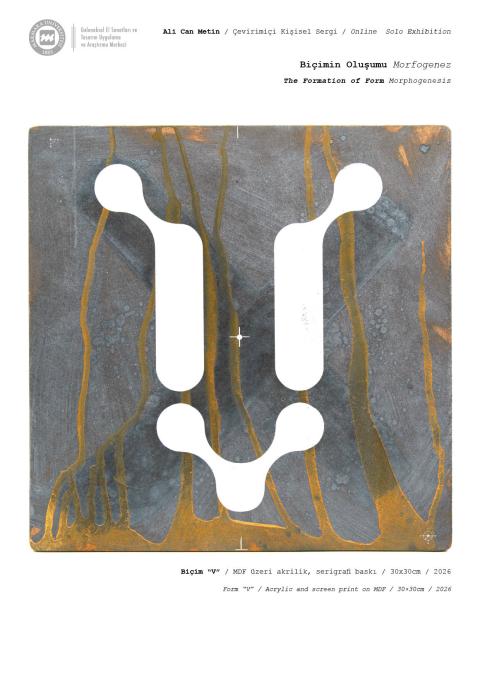
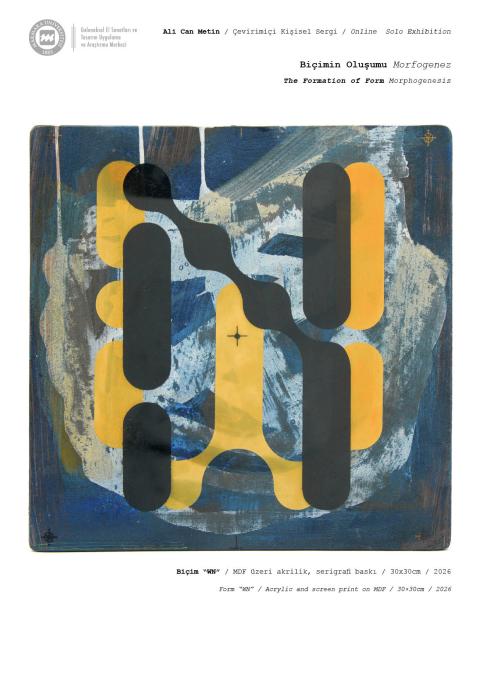
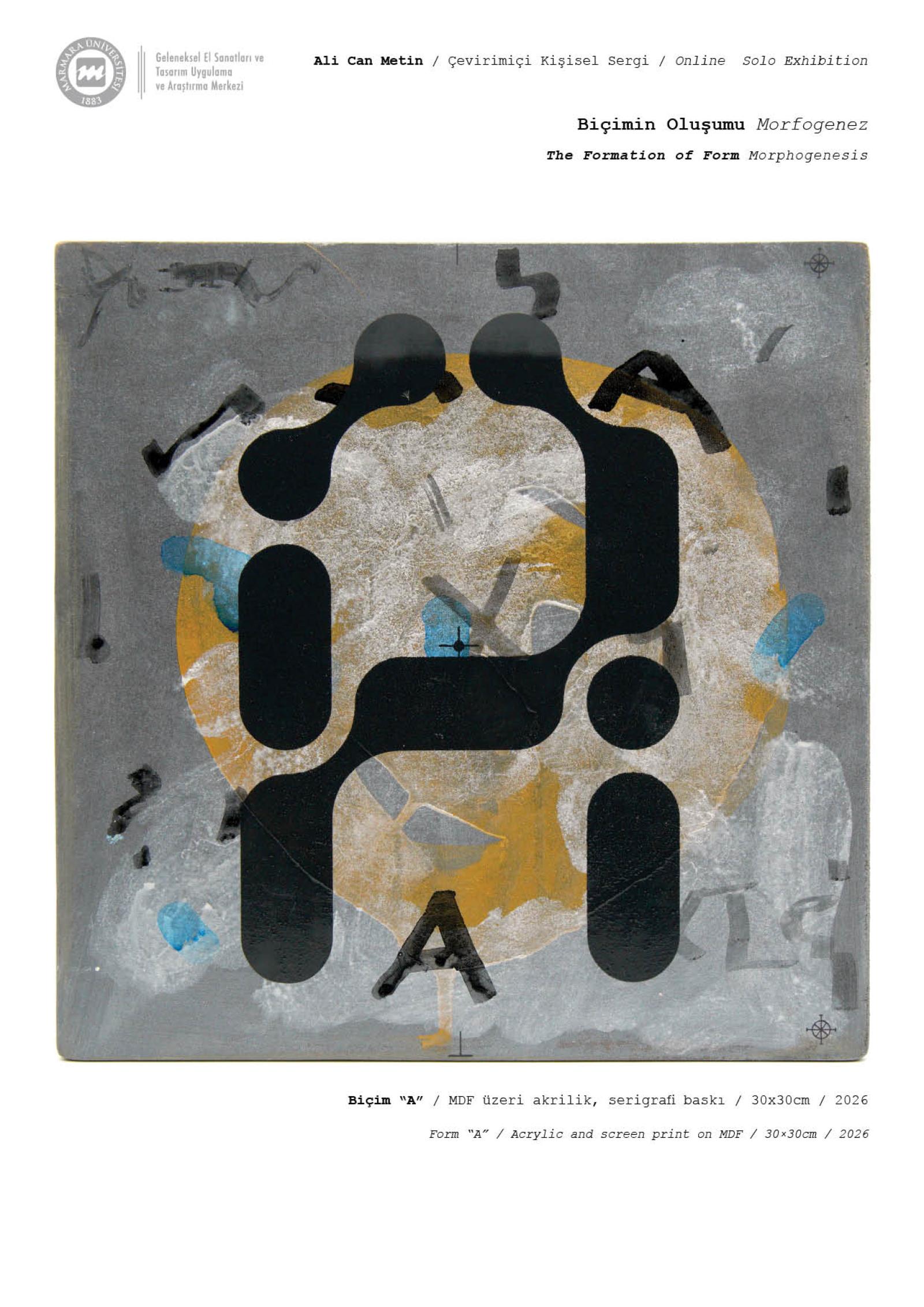
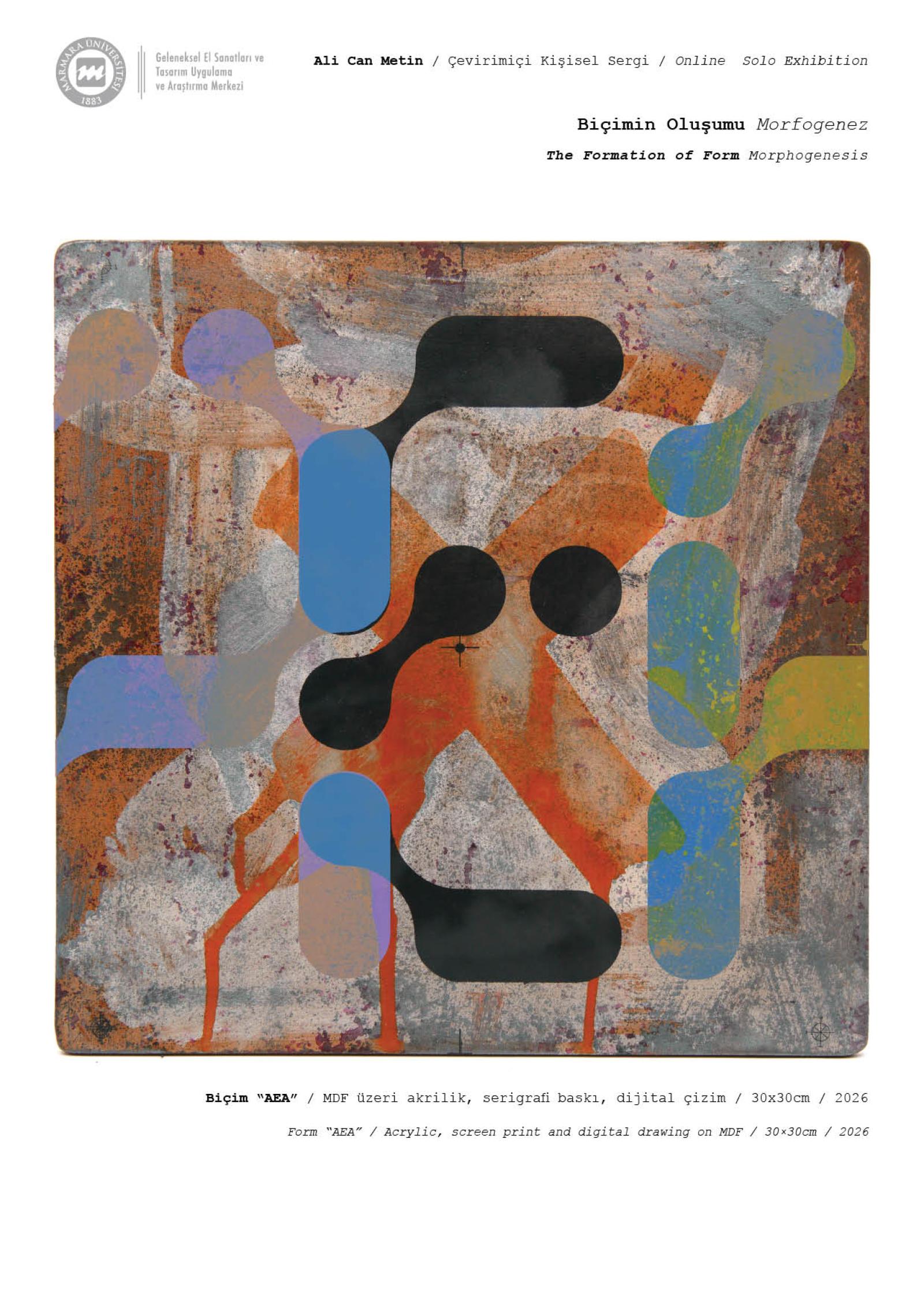
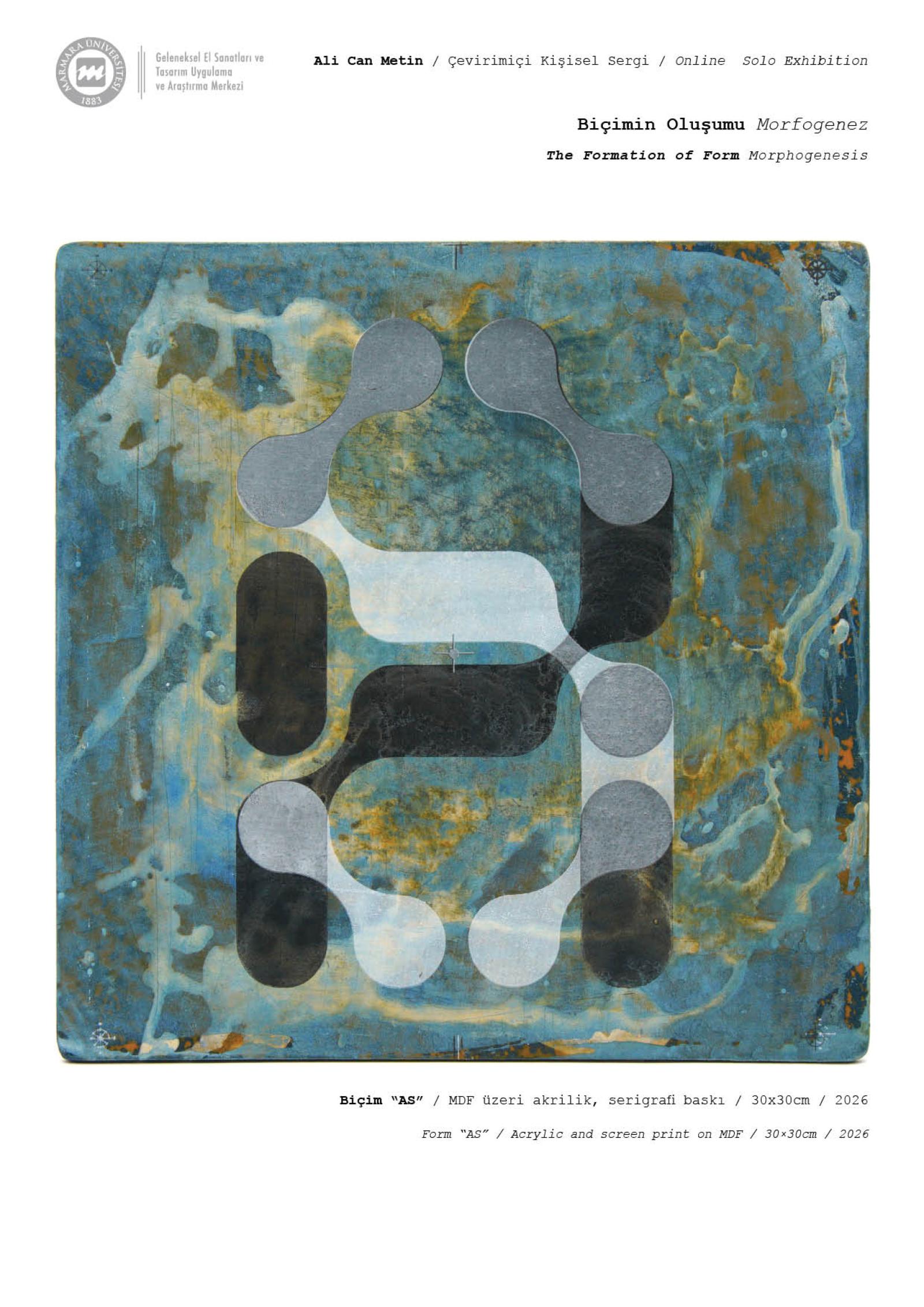
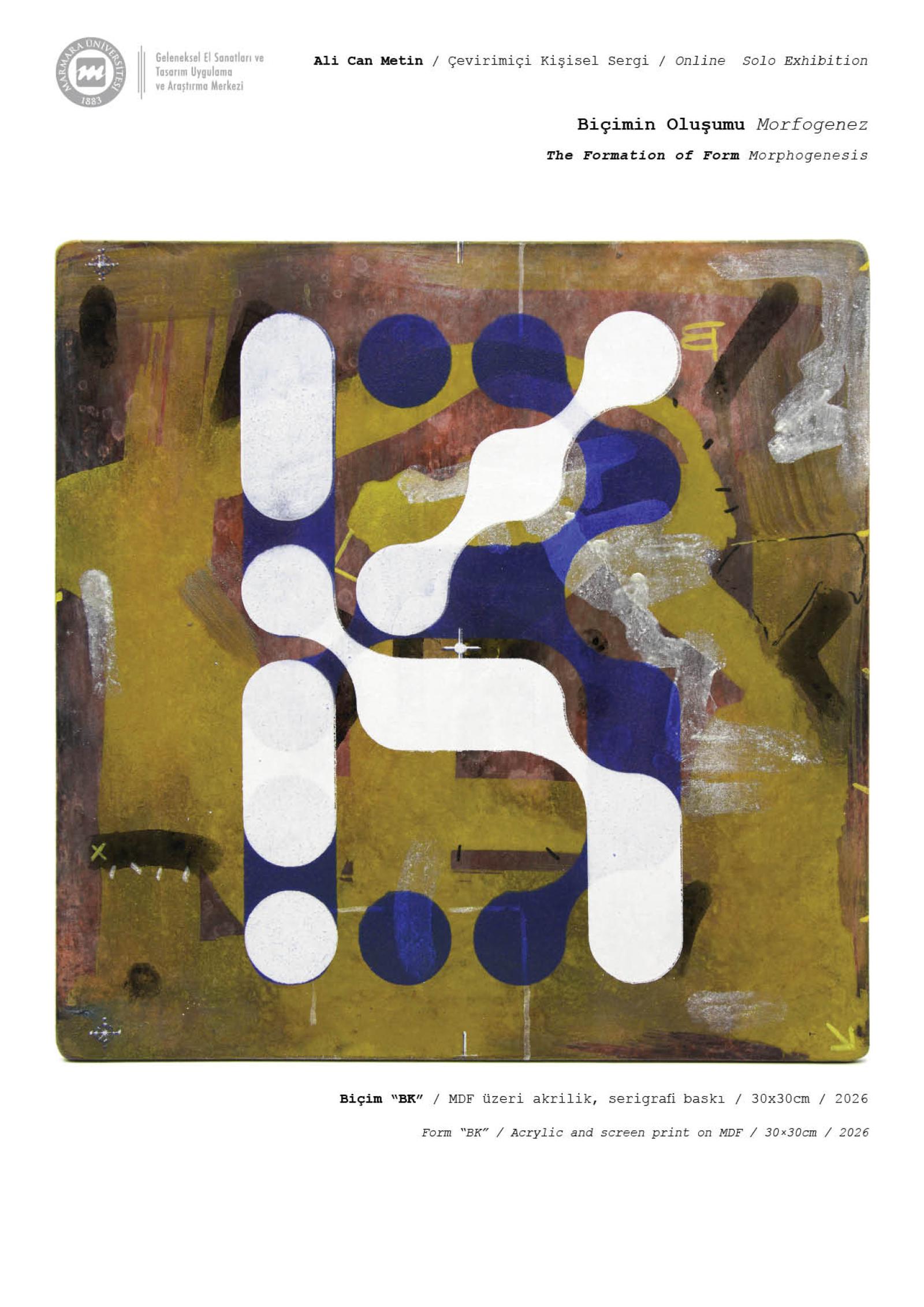
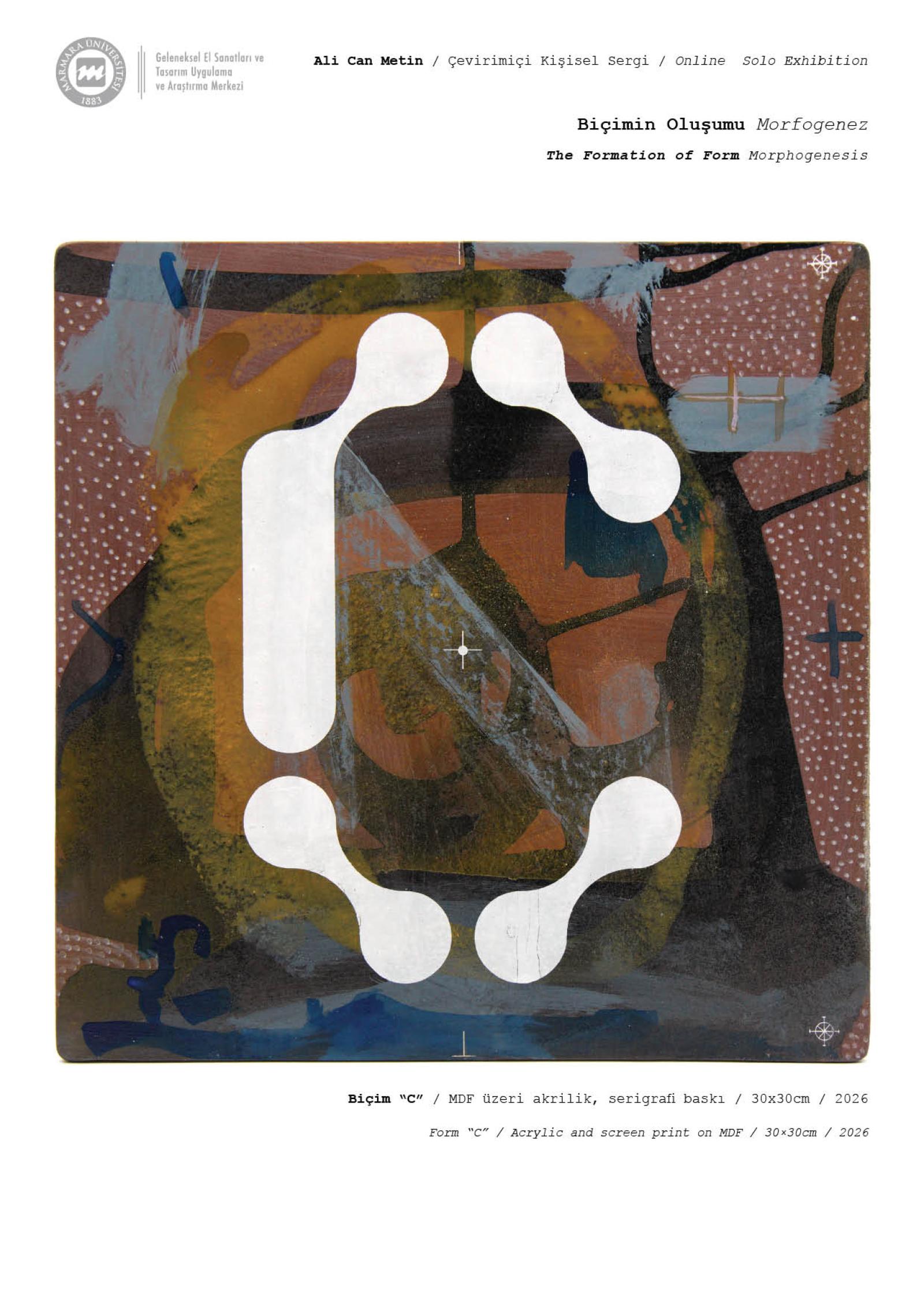
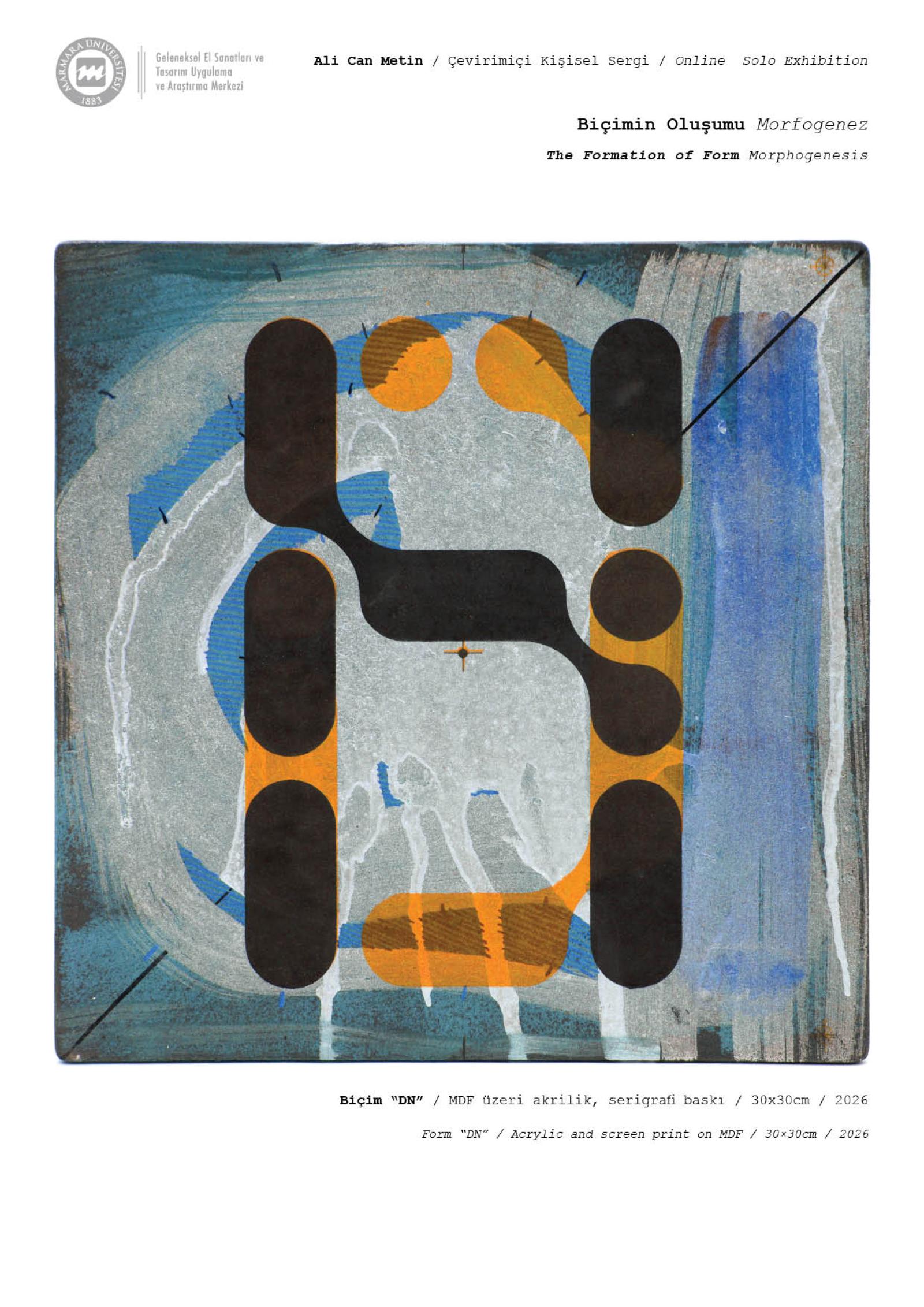
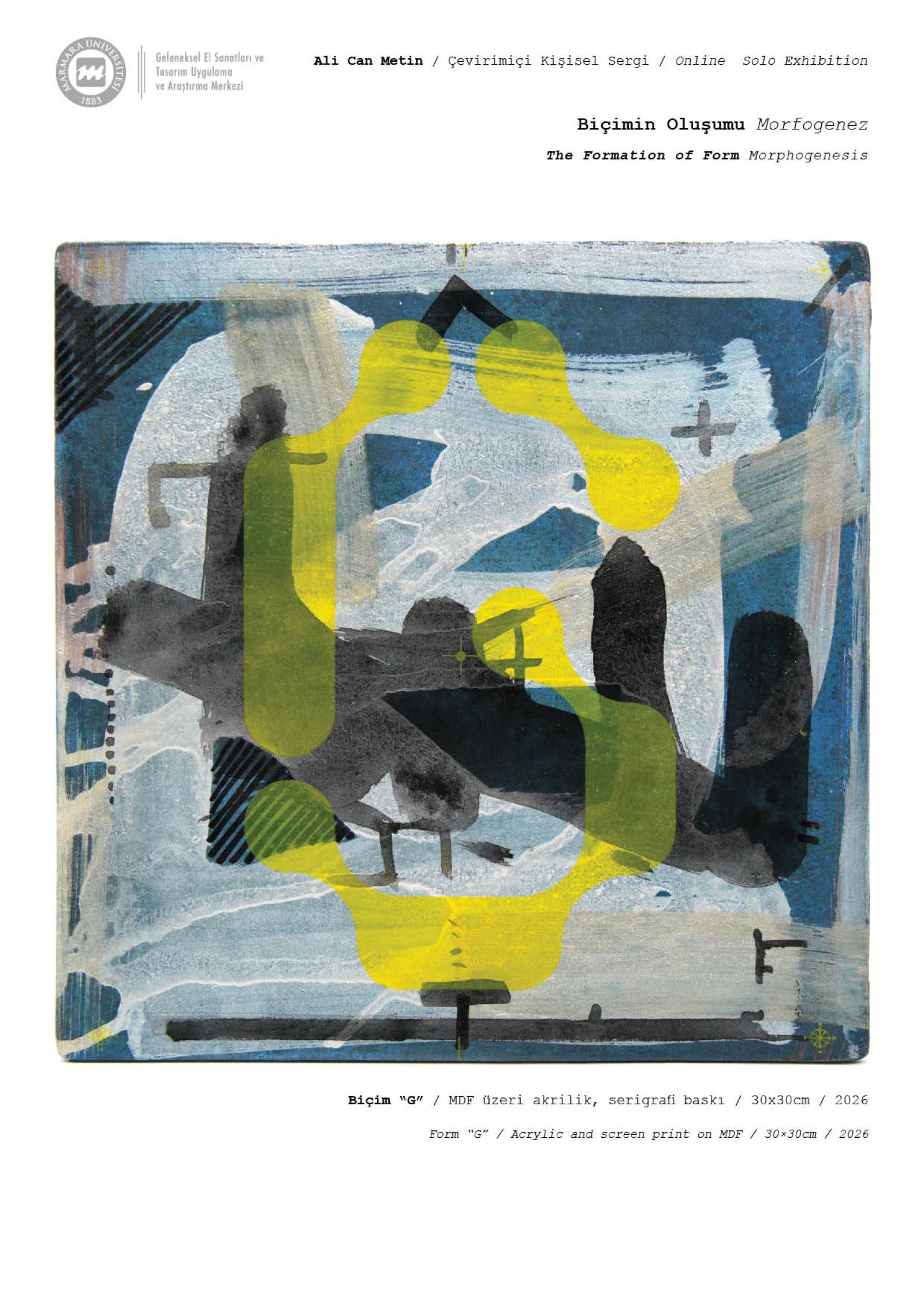
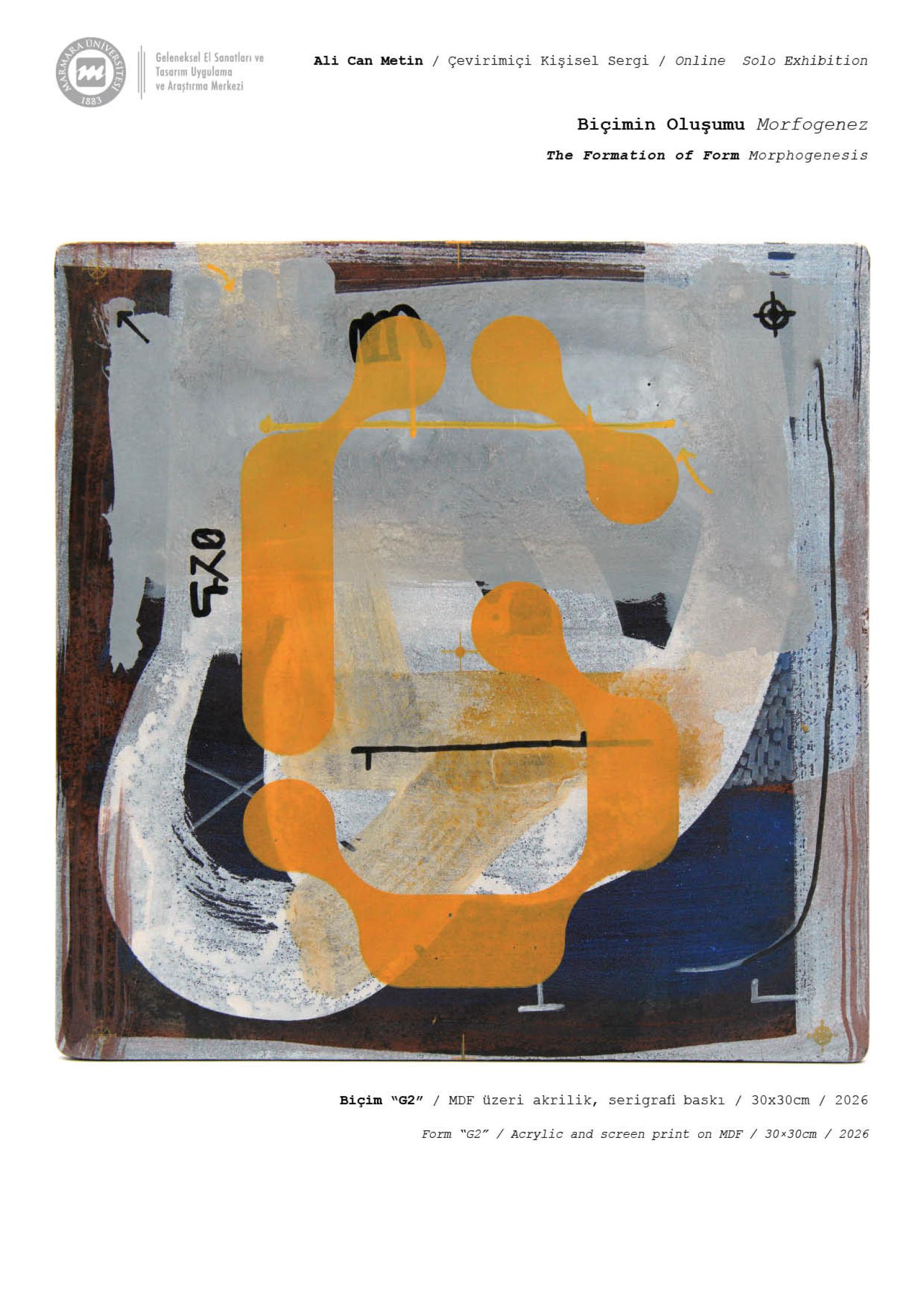
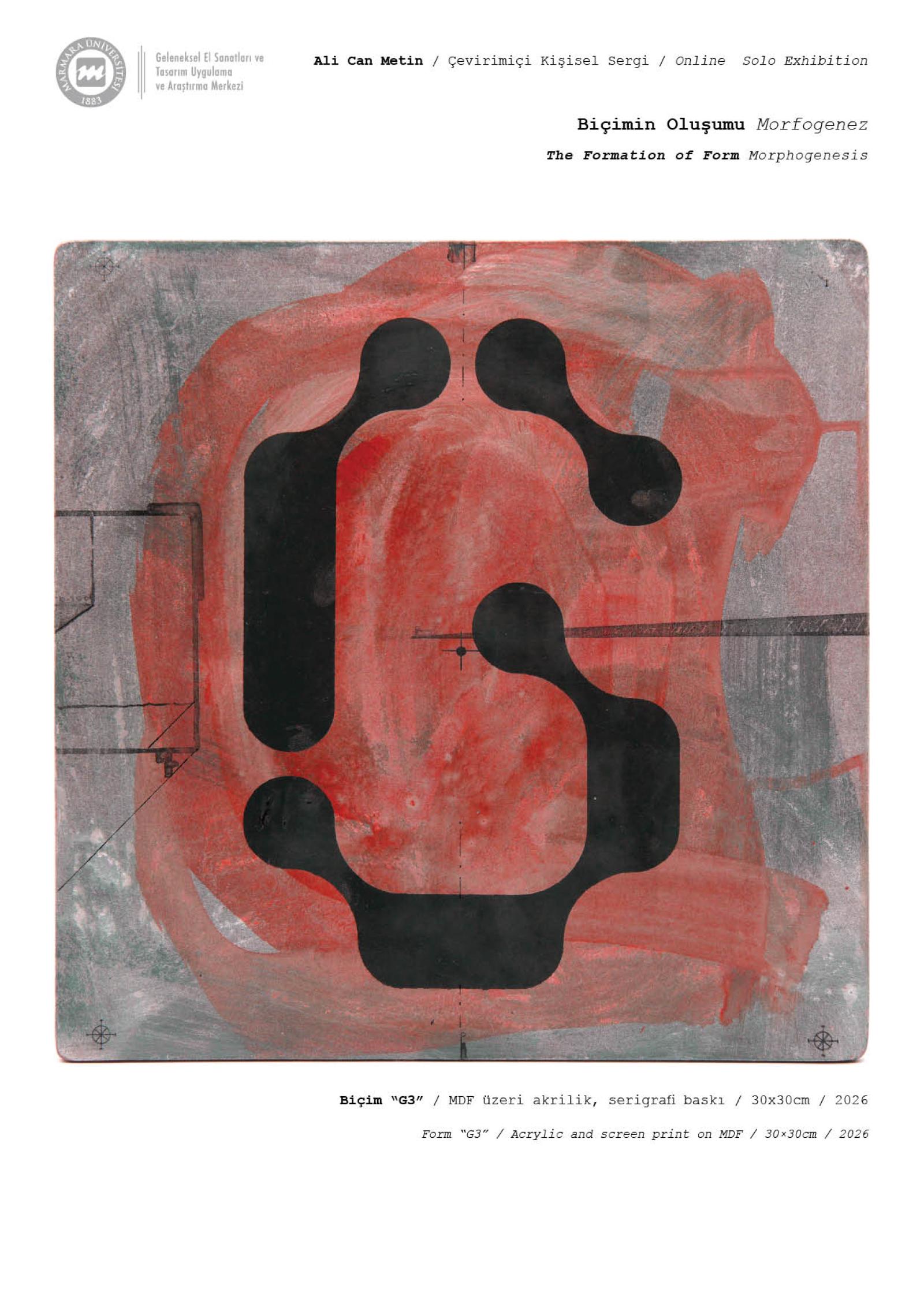
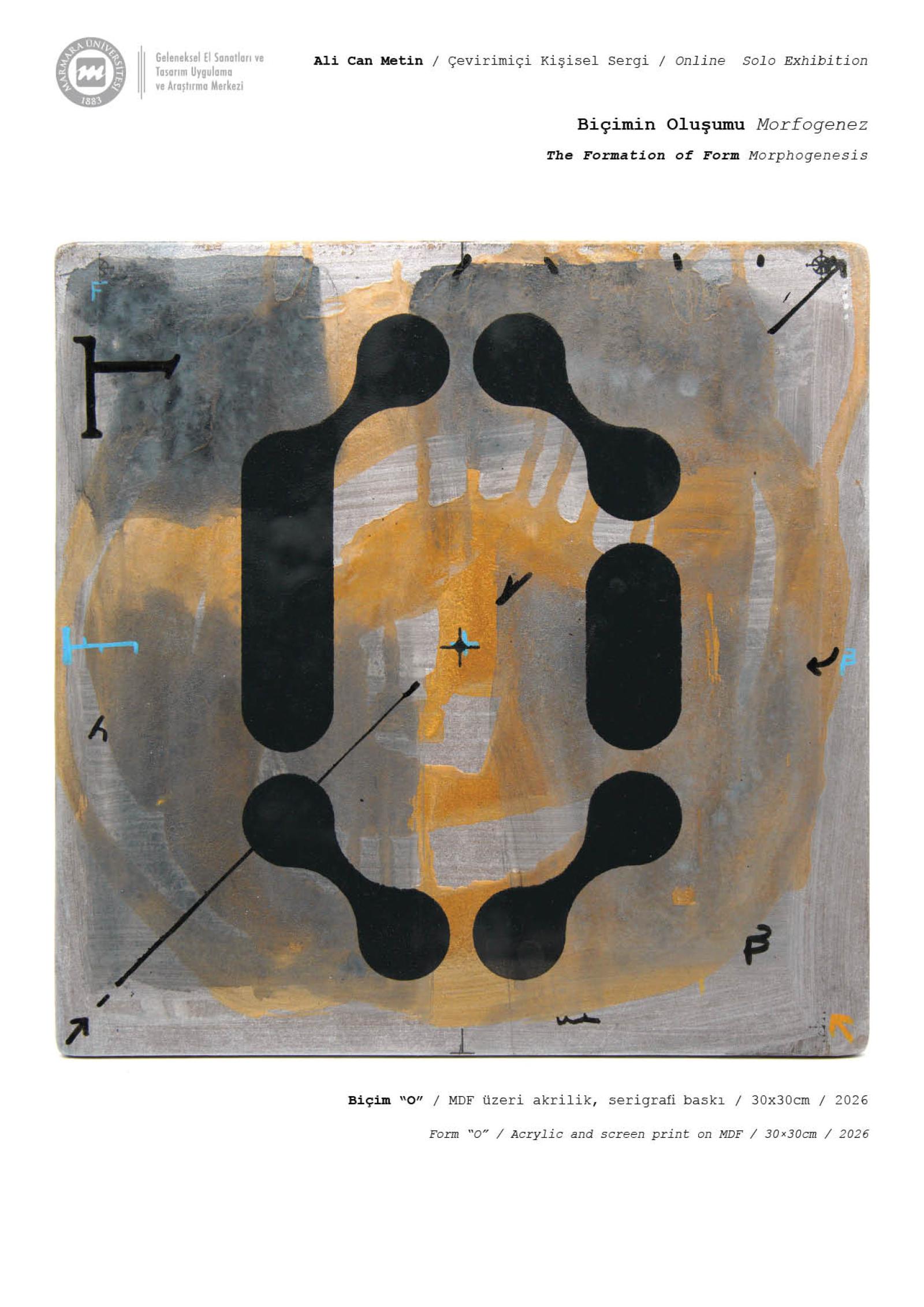
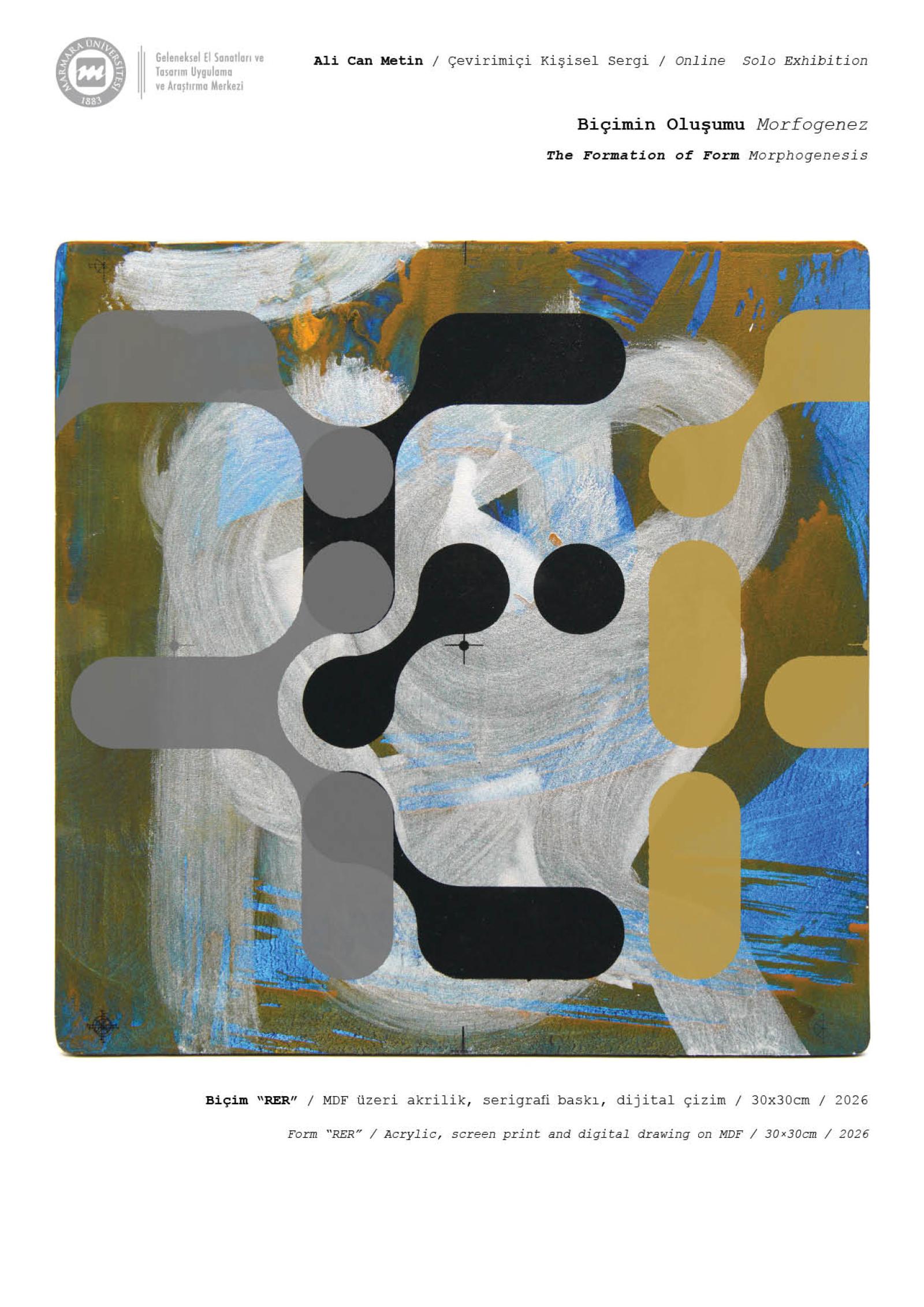
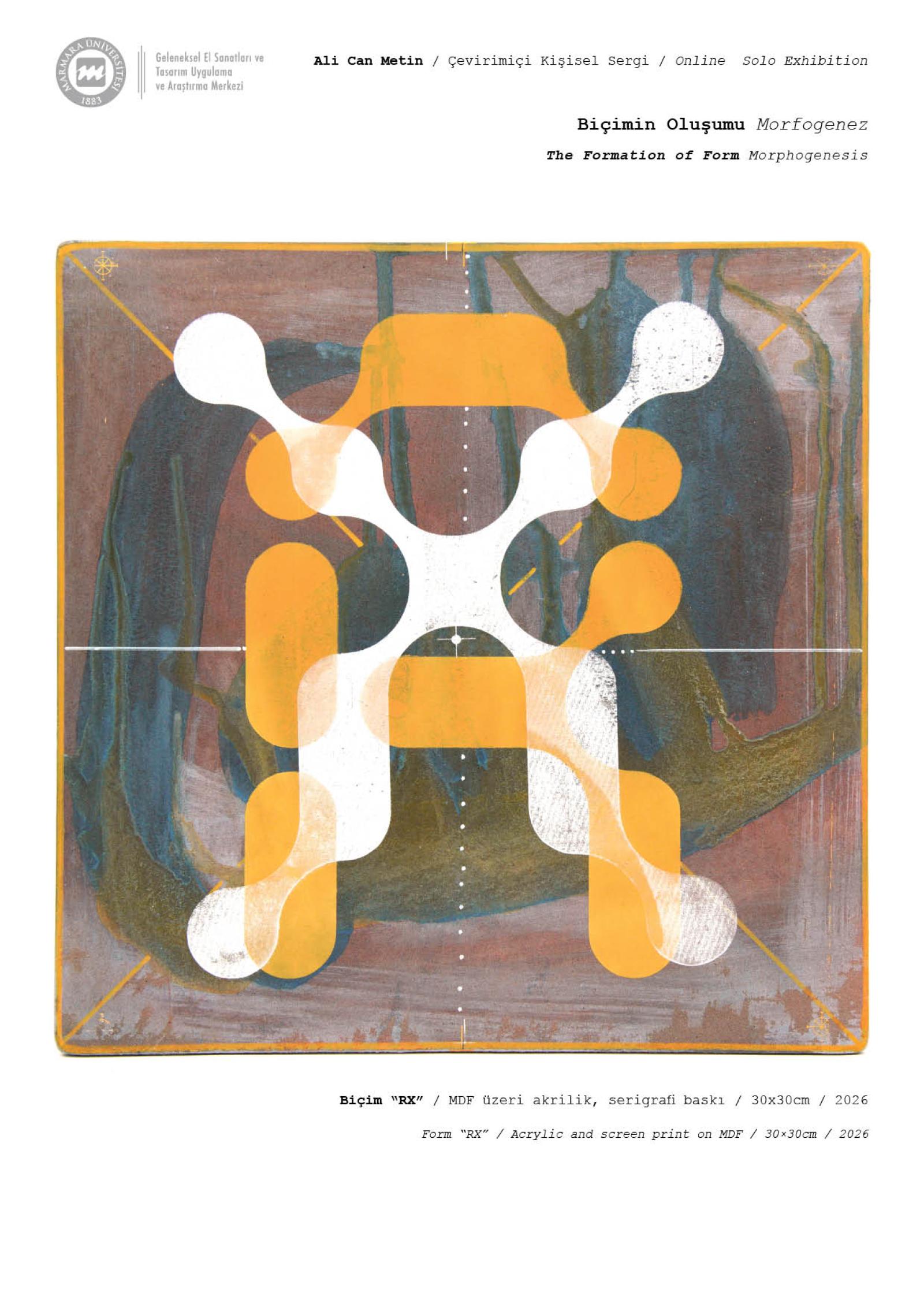
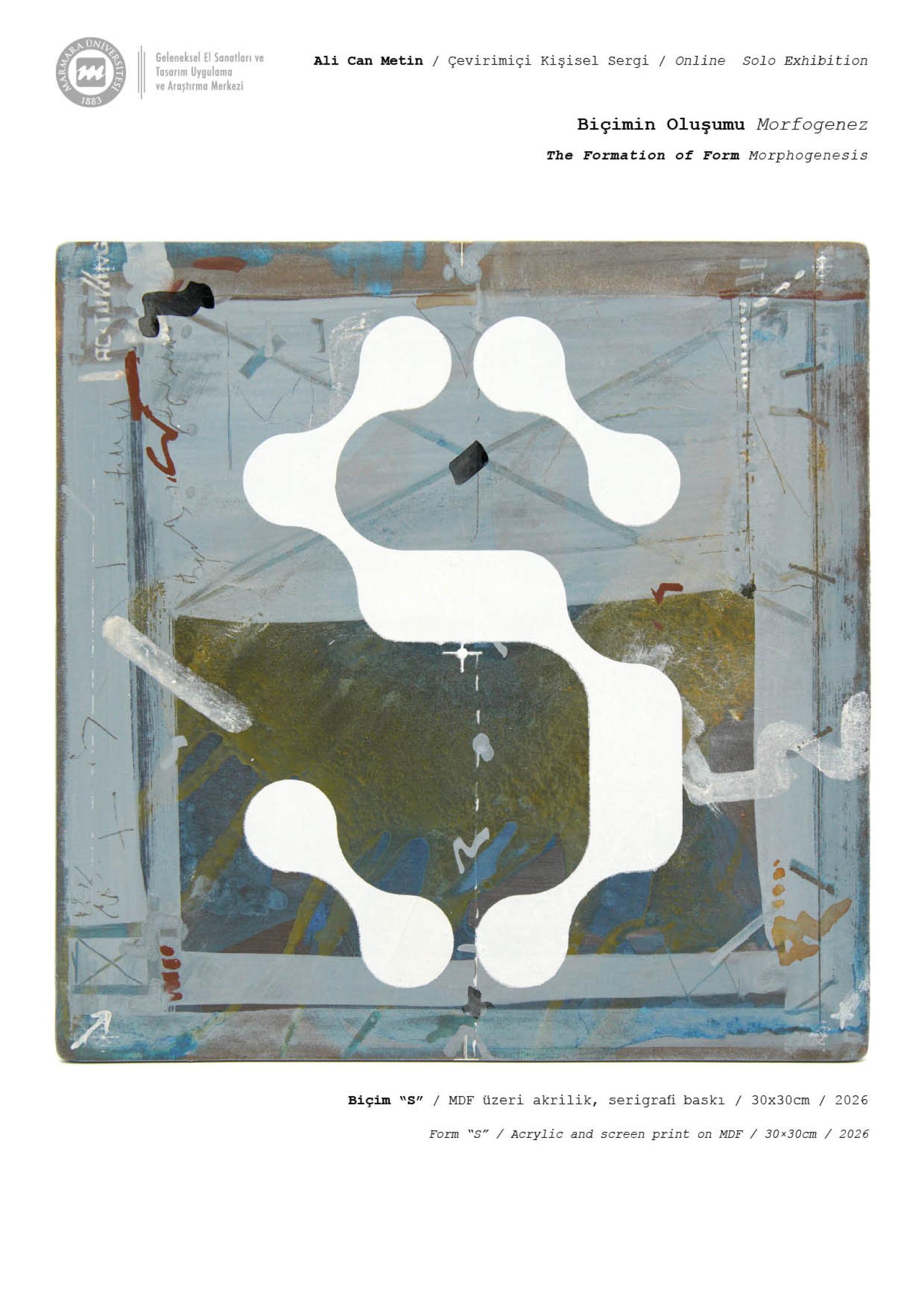
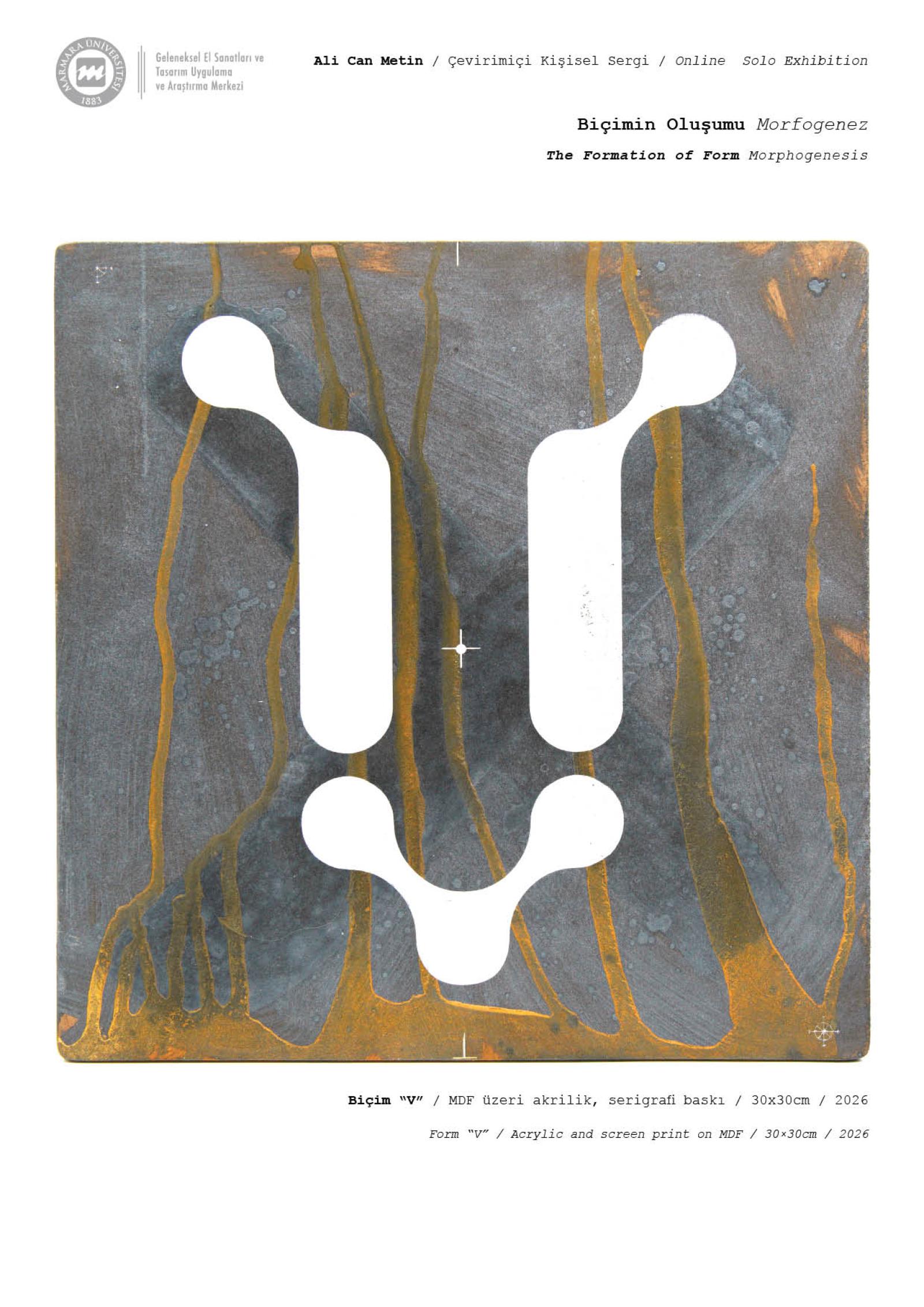
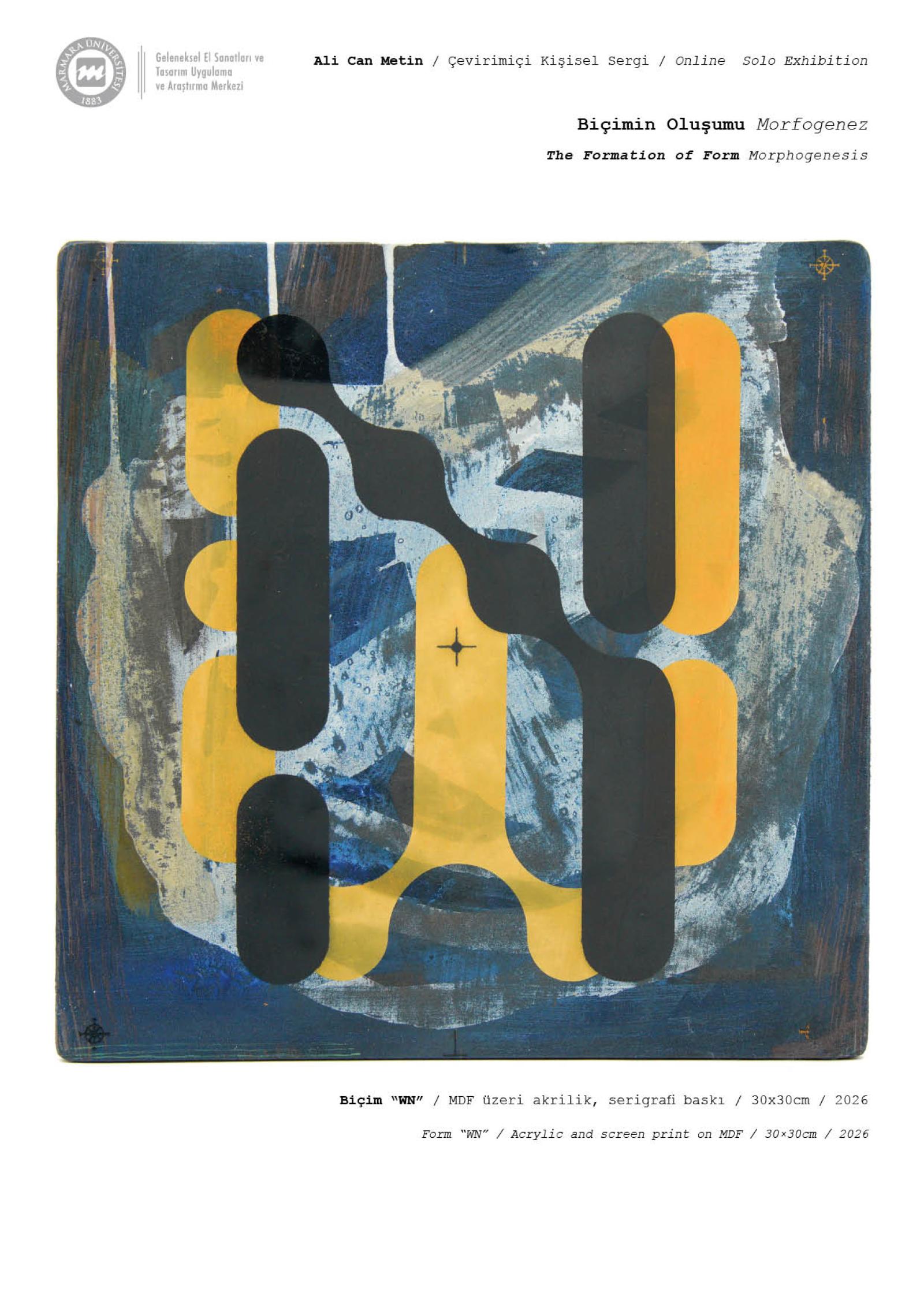
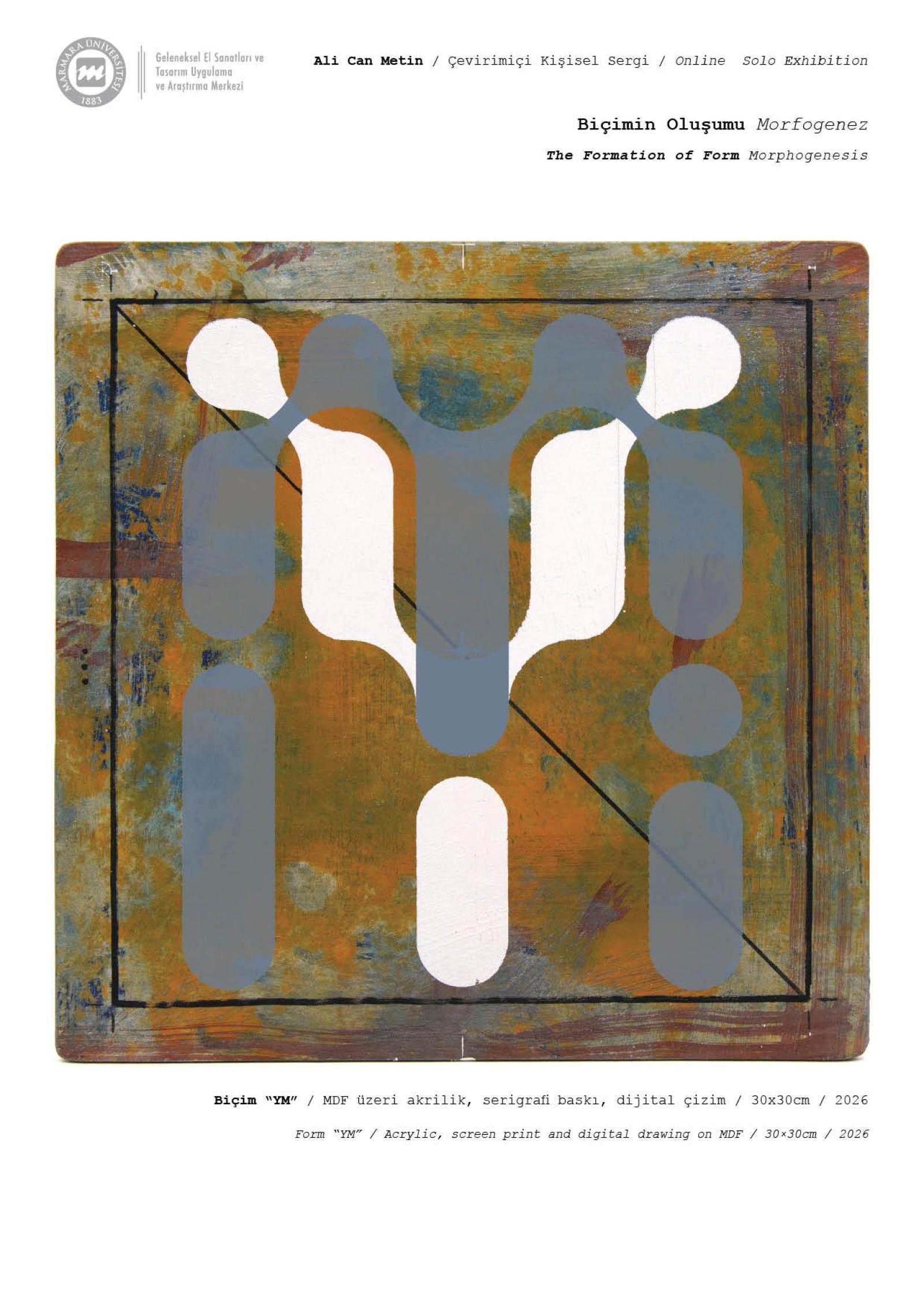
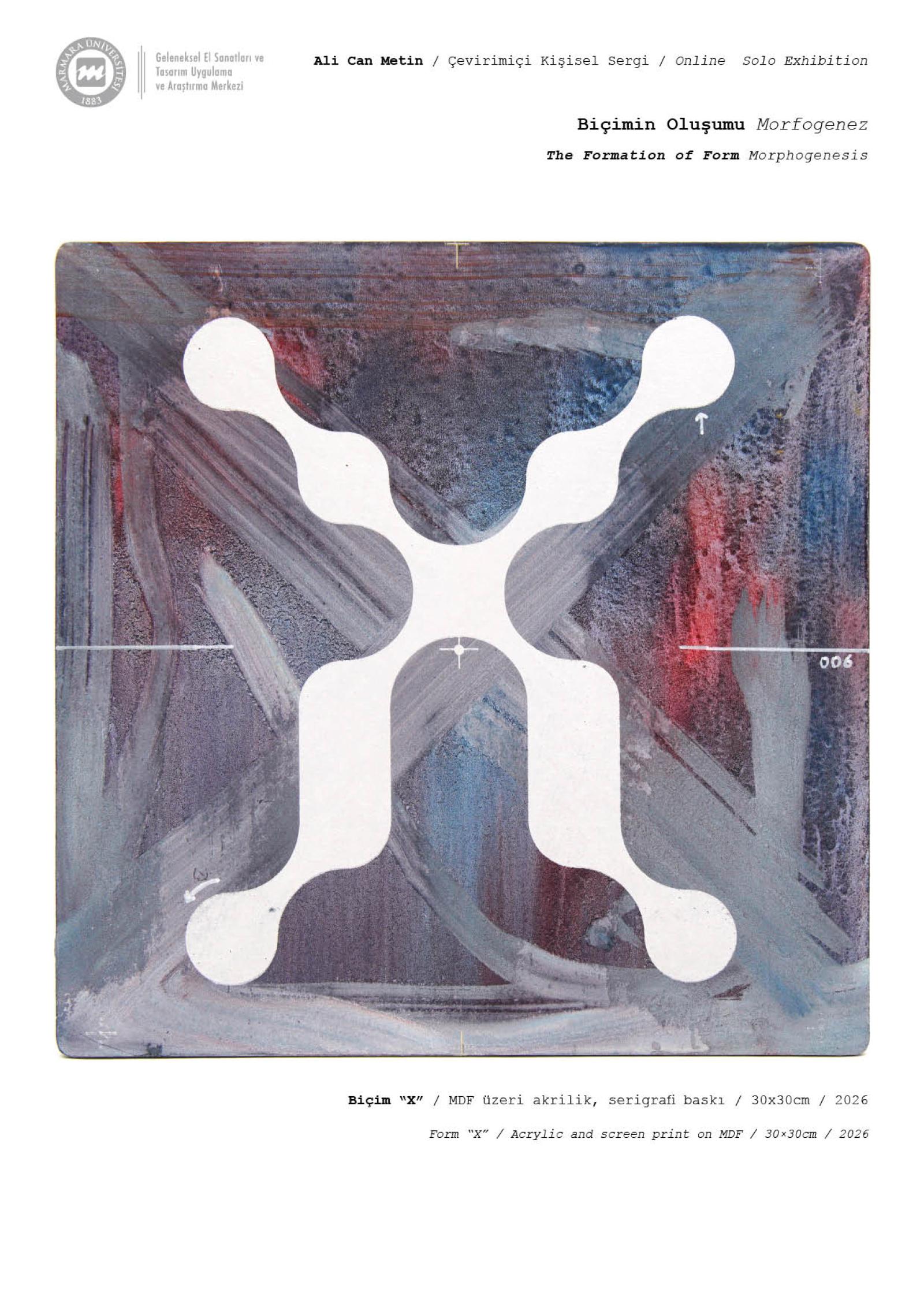
Ali Can Metin’s AC‹Turing› typeface was designed on the basis of this theory. “The Formation of Form”, however, is not a continuation of AC‹Turing›; it is an independent exhibition that draws on the same conceptual root but poses the question from a different place. The artist uses the letter bodies of AC‹Turing› to make visible the relationship between the patterns that natural formations generate spontaneously and the typographic forms derived from these patterns.
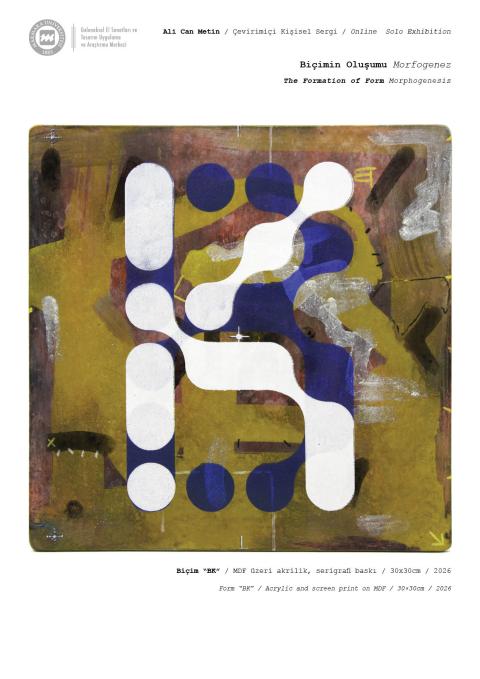
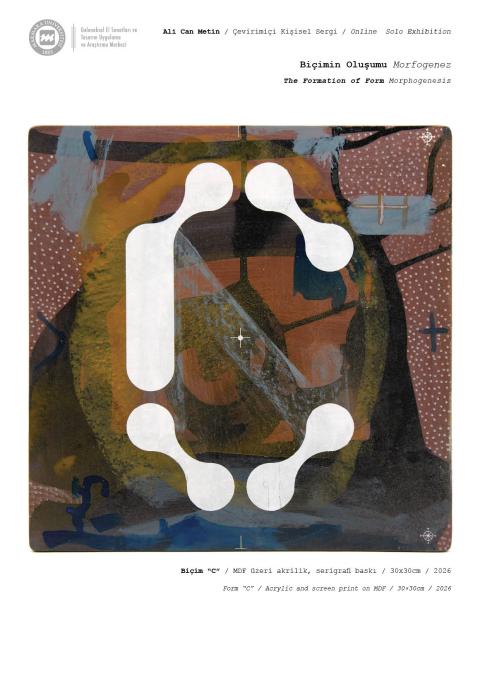
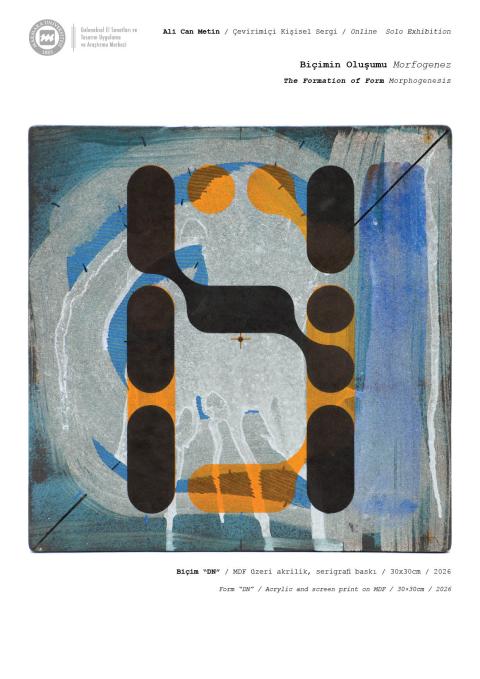
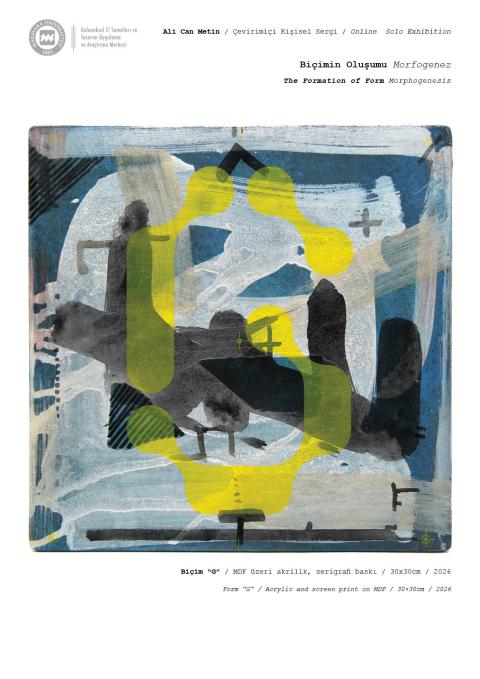
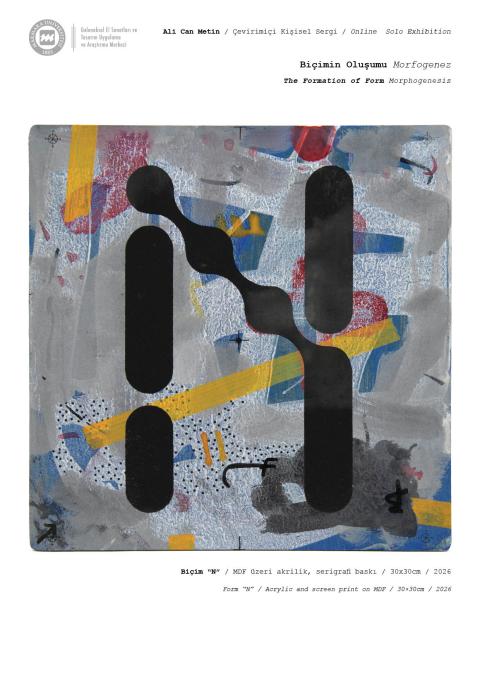
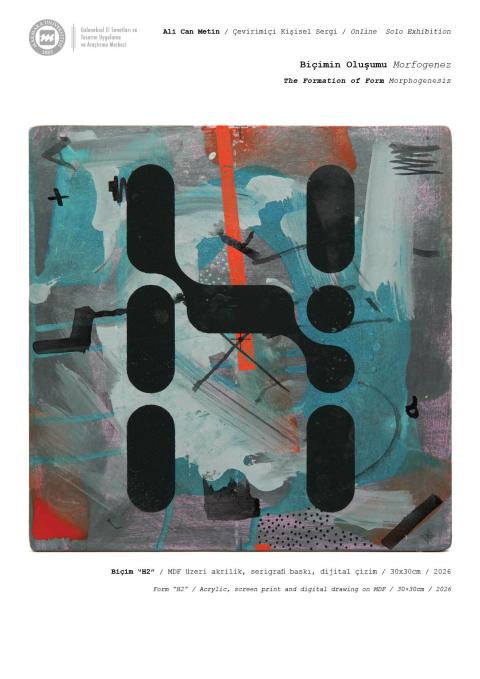
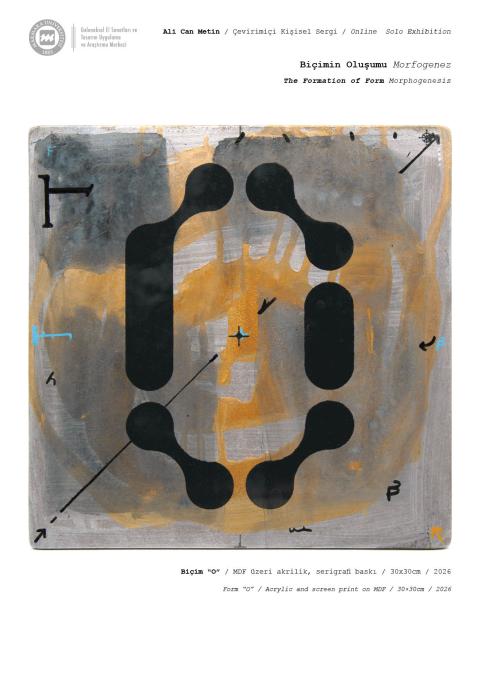
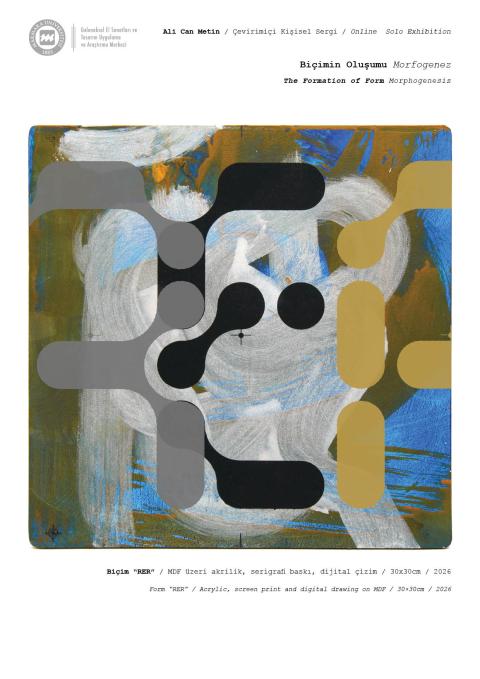
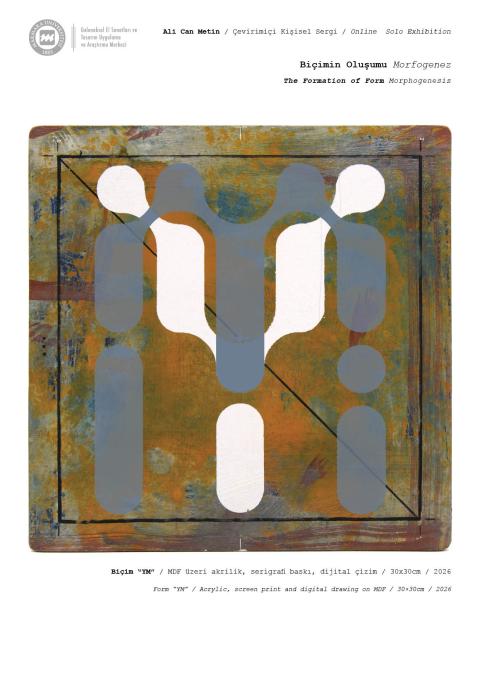
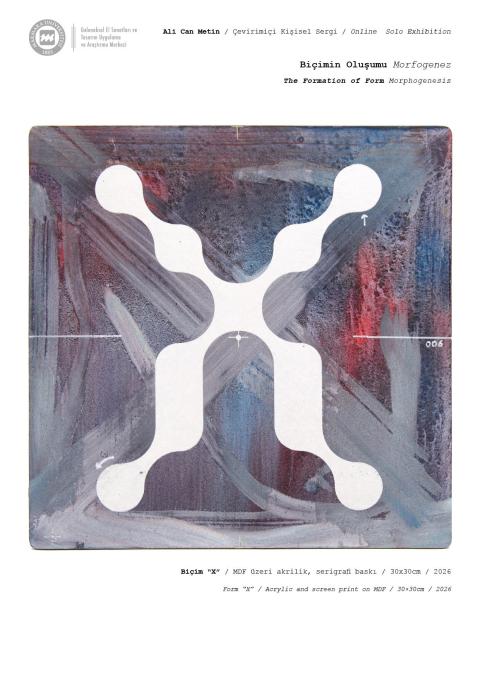
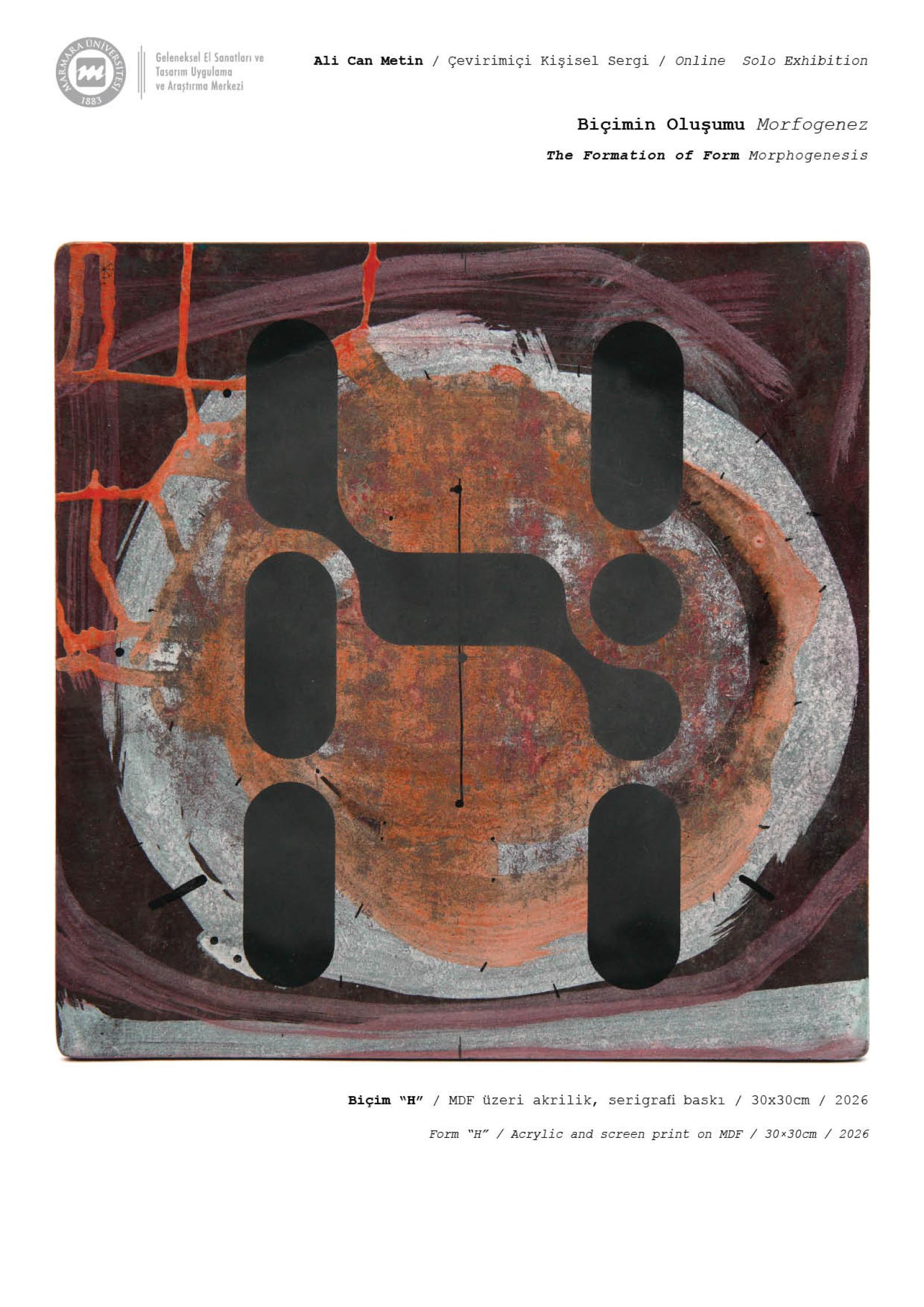
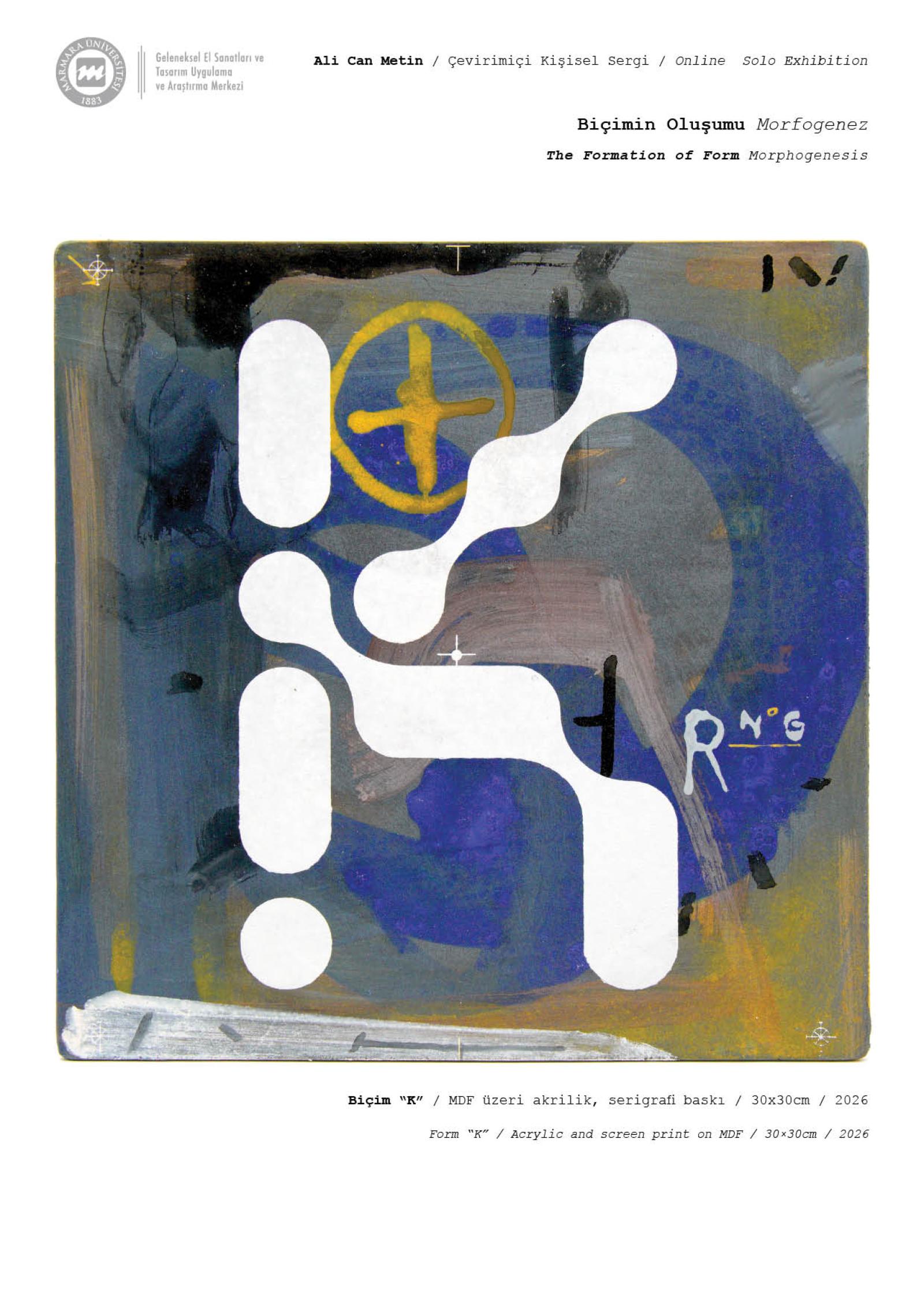
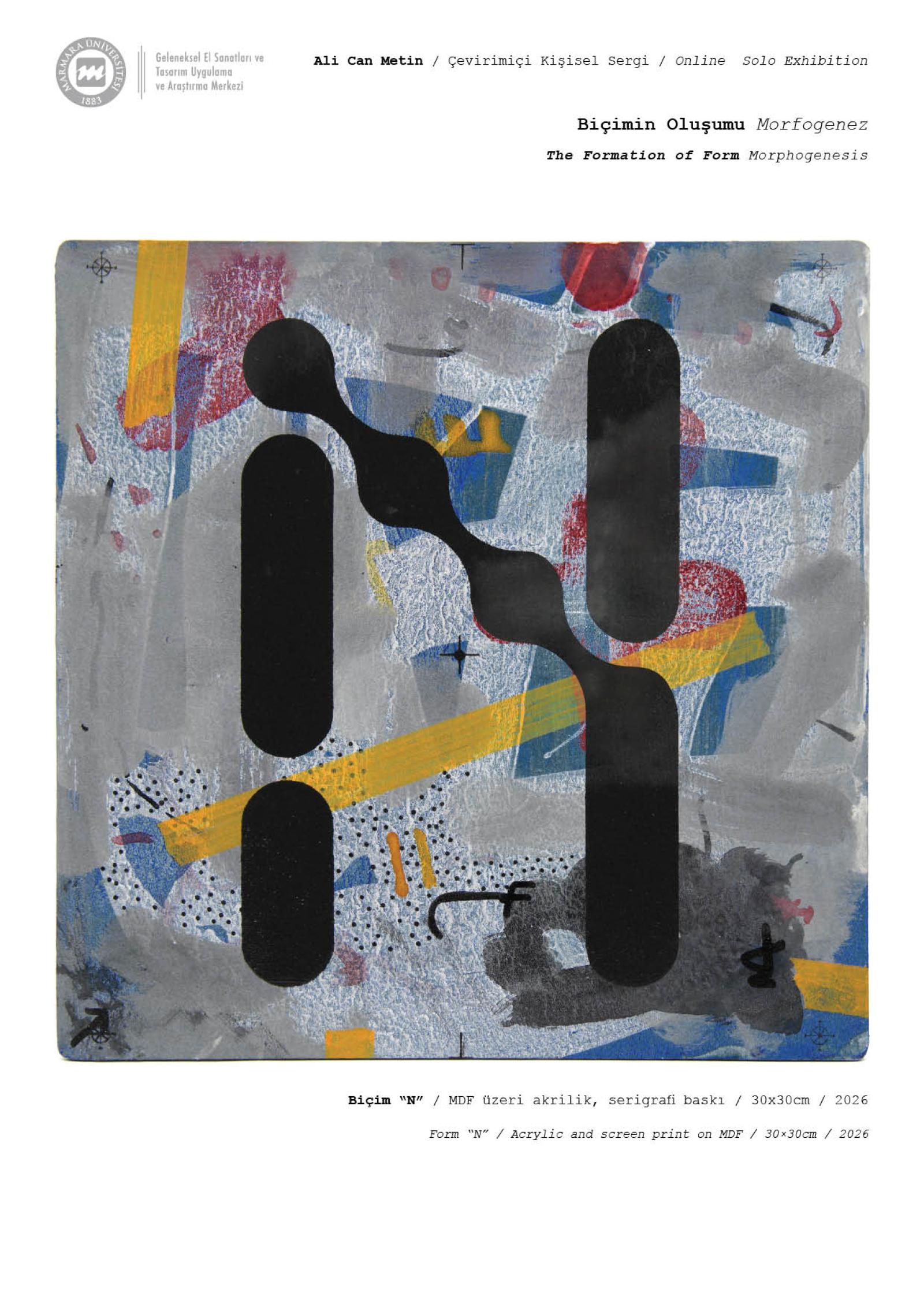
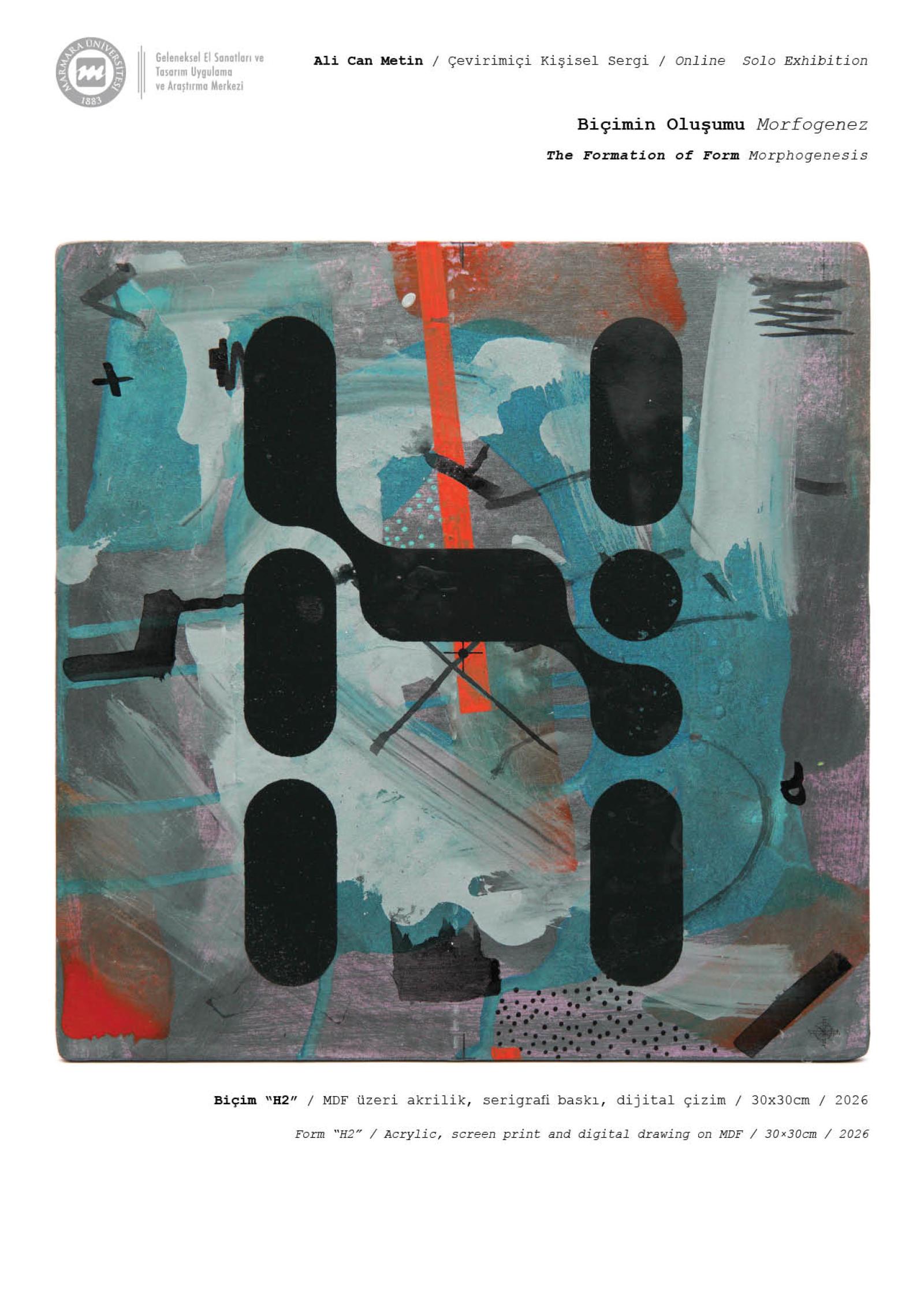
In the works, the letter bodies meet natural forms, textures and pictorial elements on the same surface. First, pictorial surfaces were built up in layers of paint, carrying free brushstrokes and the material’s own texture; the letter bodies were then transferred onto these surfaces by screen printing. This is a deliberate choice, made in order to reveal the sharp-edged, planned structure of the letterforms. Two different modes of production thus come together on the surface: one is the pictorial layer, formed spontaneously through the free movement of the hand; the other is the printed layer, measured, repeatable and precisely bounded. The semi-transparent letterforms do not cover the surface beneath; they are read together with it. The technical language of design, such as guidelines, measurement marks and registration marks, likewise stands side by side with the intuitive language of painting.
The exhibition questions how close these two orders are to one another. As Alan Turing demonstrated in his paper, natural forms generate their own patterns spontaneously, without any external intervention. A similar process is at work in this exhibition. The pictorial elements and textures of the ground take shape within their own flow. When the letter bodies derived from Turing patterns come together with this surface, a more refined structure emerges, one that appears to have formed of its own accord. The cell-like terminals of the letters, their curves reminiscent of division and their bodies flowing into one another suggest that writing, too, is a process of formation, as in nature. In “The Formation of Form”, typography goes beyond being a means of communication and becomes a field that explores the common language shared by nature and design.
Sergi Afişi_Exhibition Poster.jpg (193 KB)
Sergi Afişi_Exhibition Poster.pdf (197 KB)
Sergi Kataloğu_Exhibition Catalog.pdf (3.75 MB)